General
How to Spot the Most Trustworthy Crypto Casinos Online
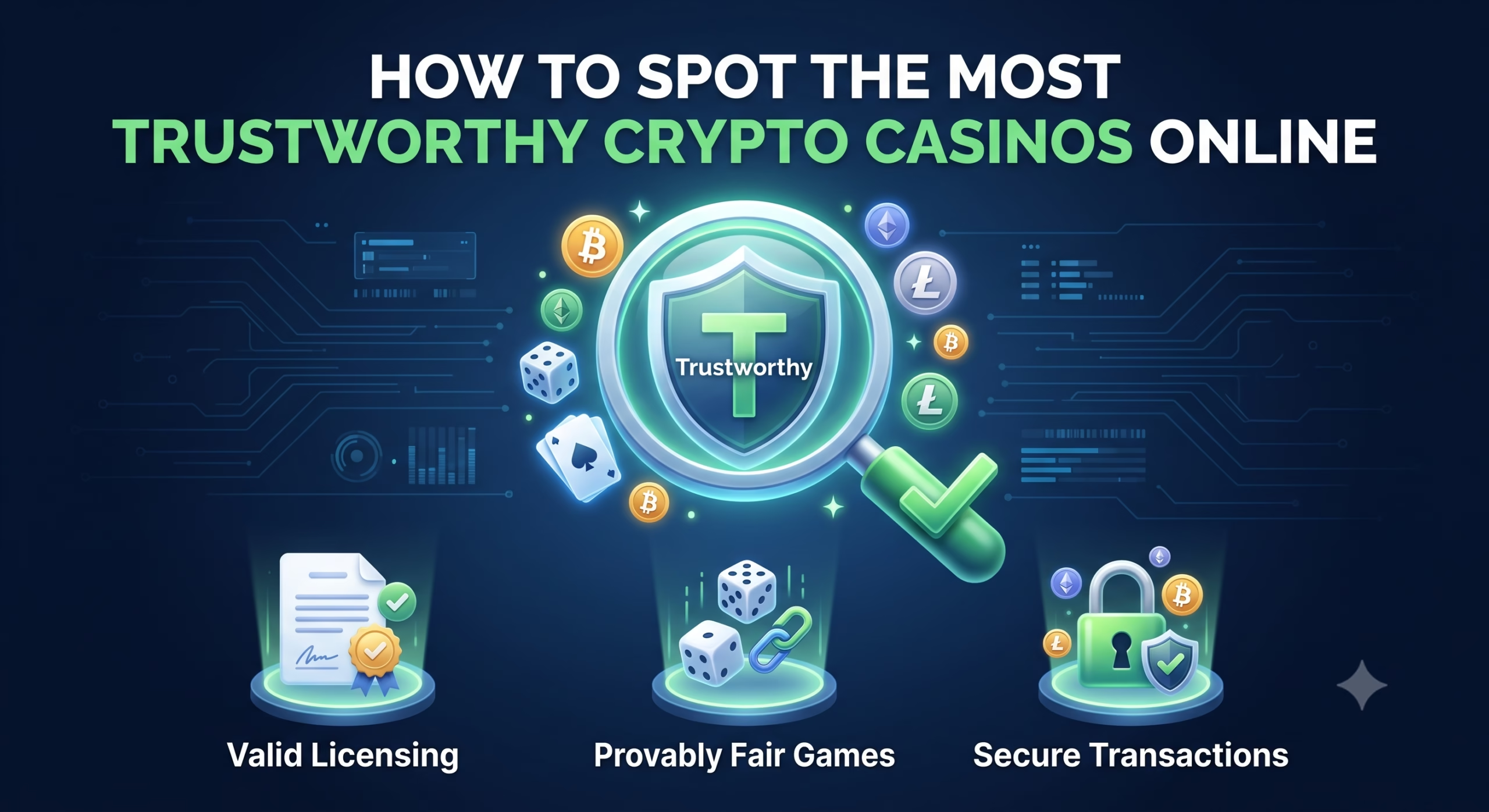

Most players who get burned by an untrustworthy crypto casino didn’t see it coming. The site looked polished, the bonuses seemed generous, and the games ran without a hitch, right up until a withdrawal request disappeared into silence. Knowing how to spot trustworthy crypto casinos online before you deposit a single coin is the difference between a fair gaming experience and a costly lesson.
Verifying Licensing for Crypto Casinos
Licensing is the clearest signal of operator accountability. Start here. A trusted crypto casino operates under a valid license from a recognized gaming authority, not a vague “registered company” disclaimer buried in the footer. Legitimate jurisdictions that issue gambling licenses with actual oversight include the Curaçao Gaming Authority, the Malta Gaming Authority, the UK Gambling Commission, and the Gibraltar Regulatory Authority. Each requires operators to meet specific standards around financial reserves, fair gaming, and player dispute resolution before a license is granted.
What matters isn’t just the existence of a license. You need to verify it’s current. Most credible jurisdictions maintain a public register where you can look up a license number directly. If a casino lists a license code but it doesn’t appear in the official register, that’s a serious warning sign. Some sites display logos from licensing bodies without holding an active license at all.
Checking for Valid Gaming Licenses from Recognized Authorities
A license number should always be cross-referenced against the issuing authority’s official public database, not just accepted at face value on the casino’s own site. The Curaçao Gaming Authority, in 2023, launched a redesigned licensing framework that requires each sub-licensed operator to hold its own individual license rather than sheltering under a master license. This change made it easier for players to verify legitimacy directly.
The Malta Gaming Authority and the UK Gambling Commission both maintain searchable online registers where any player can confirm that a specific operator name and license number match an active, valid record. Beyond confirming the license exists, pay attention to the license category. Some jurisdictions issue different classes of licenses for casino games versus sports betting, so a casino offering both should ideally hold authorization for each activity.
Operators that provide clear license details in their footer, link directly to the regulator’s website, and display an active badge from the authority are demonstrating transparency. Those that make this information hard to find aren’t.
Understanding Jurisdictional Requirements and Regulatory Standards
Different licensing jurisdictions carry different levels of player protection. The Malta Gaming Authority and the UK Gambling Commission are generally regarded as the strictest; they require segregated player funds, responsible gambling tools, and formal dispute resolution channels. The Curaçao Gaming Authority historically took a lighter touch, though its 2023 framework upgrade introduced stronger requirements than its predecessor. Offshore jurisdictions with minimal public oversight, or sites that claim no license at all but argue crypto gambling is “unregulated,” carry far higher risk.
And here’s the thing: a casino operating under a credible license has agreed to external accountability. If something goes wrong, the regulator provides a complaints channel. Without that structure, your only recourse is the operator’s own goodwill, which isn’t a meaningful safeguard. The jurisdiction matters as much as the existence of a license.
Evaluating Security, Transparency, and Blockchain Verification
Security and transparency aren’t optional features in a trustworthy crypto casino; they’re foundational. Blockchain technology gives crypto casinos a structural advantage over traditional sites, but only if the operator actually builds those tools into their product rather than just mentioning blockchain as a marketing term. A genuinely transparent site makes it possible for you to verify game outcomes independently, inspect smart contracts, and confirm that the site’s wallet infrastructure follows current security standards.
Assessing Encryption Standards and Wallet Protection Measures
The security layer protecting your account and funds starts with encryption. Any reputable crypto casino should operate over TLS 1.2 or TLS 1.3 protocols; you can verify this by checking the padlock icon in your browser and reviewing the site’s security certificate details. Beyond the connection layer, look at how the site handles wallet security. Responsible operators keep the majority of player funds in cold storage wallets, which are offline and not exposed to live hacking attempts. Hot wallets, kept online for active transactions, should hold only the liquidity needed for day-to-day withdrawals.
Sites that disclose their wallet management approach are showing accountability. You should also confirm that the site supports two-factor authentication for player accounts. Without 2FA, a single compromised password is all it takes to lose your balance. Some sites now support hardware key authentication as well, which is stronger than SMS-based verification alone.
Confirming Provably Fair Gaming and Audited Smart Contracts
Provably fair technology is one of the most meaningful trust signals in crypto gambling. The system works by generating a cryptographic hash of each game’s outcome before the round starts, sharing that hash with the player in advance, and then revealing the seed values afterward so you can independently verify the result wasn’t manipulated. This removes the need to simply trust the operator’s word.
Any casino that claims provably fair should provide a verification page or tool where you can enter the seed values from any completed game and confirm the outcome. If the casino makes that process unclear or difficult, the claim is hollow. Beyond individual game verification, look for evidence of third-party audits. Independent testing laboratories, including iTech Labs and eCOGRA, publish audit certificates confirming that a site’s random number generation systems meet established international standards. A casino that displays current, verifiable certificates from recognized auditors has subjected itself to external scrutiny. That’s a meaningful distinction from one that simply asserts its own fairness.
Assessing User Reviews, Withdrawal Practices, and Operator Reputation
A license and good security architecture tell you about structure and intent. User reviews and withdrawal behavior tell you about reality. The gap between what a casino promises and what it delivers becomes visible in player complaints, forum discussions, and payout histories. Reading that evidence carefully, not just scanning the star rating on the homepage, is how you’ll actually spot the trustworthy sites.
Identifying Red Flags in Player Complaints and Payout Delays
Withdrawal issues are the most common source of legitimate player complaints, and they follow recognizable patterns. A single complaint about a delayed withdrawal could reflect a one-off KYC check or a technical issue. But a pattern of complaints describing the same problem, accounts frozen at withdrawal, support going silent after a deposit, and winnings voided under vague “bonus abuse” clauses, points to a structural problem with how the operator handles money.
Look for reviews on independent sites rather than testimonials hosted on the casino’s own site. Pay attention to:
- Repeated mentions of withdrawal limits that weren’t disclosed upfront
- Support teams that respond before a deposit but disappear afterward
- Bonuses with wagering requirements that make cashing out practically impossible
- Accounts closed with balances remaining after a player wins a large amount
The presence of a few resolved complaints isn’t automatically damaging. In fact, an operator that publicly responds to issues and documents resolutions is demonstrating accountability. Unresolved complaints that stack up with no operator response? That’s the real concern.
Researching Operator History and Community Trust Signals
The team or company behind a casino matters as much as the site itself. Operators with an established track record across multiple sites carry reputational accountability that new, anonymous projects simply don’t. Look for named owners, a clear corporate registration, and a history of operating other sites that players can cross-reference. Forum communities dedicated to crypto gambling, including discussion boards and dedicated review ecosystems, tend to surface this information quickly.
Community trust builds slowly and breaks fast. A site with years of positive player interactions and a responsive operator presence on public forums is a different risk profile from a site that launched three months ago with no verifiable company behind it. Newer sites aren’t automatically untrustworthy, but they haven’t had the time to prove themselves under pressure. For any new site you’re considering, search for how the operator handled disputes, whether withdrawal policies changed without notice, and how actively the team engages with its player community in public spaces.
Conclusion
Spotting trustworthy crypto casinos online comes down to three things: verified licensing from a jurisdiction with real oversight; transparent security and provably fair systems that you can independently check; and a track record of treating players fairly when money is on the line. No single signal is enough on its own. A valid license from a credible authority, combined with third-party audit certificates, transparent wallet practices, and a clean record in independent community forums, gives you a far more complete picture.
Take the time to verify each layer before you deposit. Treat any site that makes that verification difficult as one that has something to hide.


