Gambling
Famous Esports Players Who Could Make Strong Poker Players
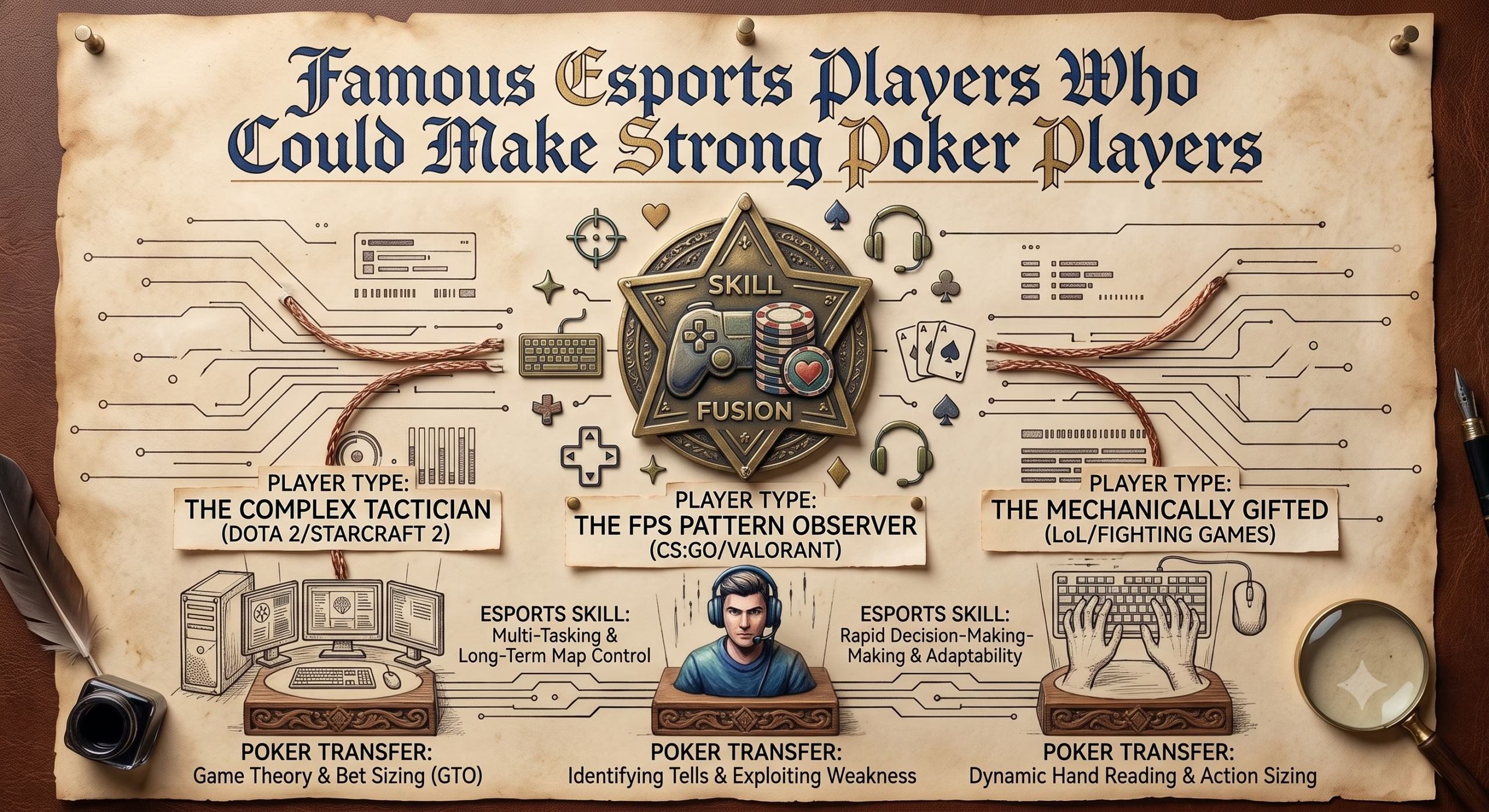

Poker rewards a narrow set of traits. It wants emotional control when money is on the line, an eye for reading an opponent from small signals, and a tolerance for variance that lets a player make the right call and still lose. A few esports champions have spent a decade drilling exactly those traits inside their own games, and the crossover is closer than the different screens suggest. None of the players below are known for cards. Each has already mastered the mental machinery poker runs on.
Faker and the Discipline of Composure
Lee “Faker” Sang-hyeok has won six League of Legends World Championships across more than a decade, a record no other player approaches. The number that matters more for poker is his pulse. He meditates before matches, keeps a flat expression through wins and disasters alike, and asks teammates to stay stoic when a game swings. In poker terms, he does not tilt. A player who can lose a teamfight worth a season and reset on the next play is built for the swings of a long session, where the biggest leaks come from chasing losses and playing on tilt.
Composure like that is rarer than any mechanical skill. Most players who reach a high level can execute. Far fewer can execute after three bad beats in a row, which is the exact condition a poker bankroll lives or dies on. The same longevity is what poker rewards across a career. One tournament score fades fast. A player who shows up sharp for ten straight years, the way Faker has, is the profile that compounds a bankroll instead of spiking it once.
Daigo Umehara and the Art of the Read
Daigo Umehara built a fighting-game career on reading people. His book The Will to Keep Winning treats an opponent’s habits and tells as the core of high-level play, and his EVO Moment 37 comeback came from predicting exactly what his opponent would do under pressure. Fighting games and poker share that spine. Both reward a player who watches for patterns, builds a model of the person across the table, and acts on a read before the other side knows it exists.
Put Daigo in a cash game and the read would transfer intact. The only new skill would be applying it to hidden cards, which is a smaller adjustment than most people assume. The habit of studying a person until their next move becomes predictable is the whole art, and he has practiced it for 25 years. As the best Street Fighter player of his generation, he also carries a mantra that fits a poker grind precisely, that 99.9% of people cannot keep winning. The line is about endurance, the willingness to keep refining a craft long after early success, and a poker career punishes anyone who stops, because the field keeps getting tougher and yesterday’s edge erodes.
N0tail and the Long-Game Mind
Johan “N0tail” Sundstein captained his Dota 2 team OG to back-to-back world titles and became one of the highest-earning players in esports. His edge came from strategy, drafting, and reading a best-of-five series across dozens of decisions where a single misjudged risk ends a tournament. That is equity-and-risk thinking in a different costume. Hand him a stack and ask him to play poker, and the instinct that lets him weigh a risky team fight against a slow, safe path would map straight onto knowing when to commit chips and when to let a hand go.
Long-game discipline is also what keeps a player solvent. A captain who thinks two drafts ahead is already doing the mental work of a grinder who plans a session around survival first and profit second. His OG side won The International twice, in 2018 and 2019, the only team to repeat as Dota 2 world champions. Repeating at that level rewards steadiness across two full years of pressure, which is the same trait that keeps a poker player winning across thousands of hands.
s1mple and the Clutch Instinct
Oleksandr “s1mple” Kostyliev is a Counter-Strike Major champion rated by many as the best to ever touch the game. His signature is the clutch, a one-versus-many situation where staying calm and calculating live odds decides the round. Poker calls the same moment a big bluff or a hero call. Both demand a player who can hold nerve while the pressure spikes and still run the numbers in real time.
Aggression is his other weapon, and controlled aggression is what separates winning poker players from passive ones. He already knows how to press a small edge hard without tipping into recklessness, which is the exact balance a no-limit table punishes people for missing. He has collected multiple player-of-the-year awards for reading rounds and adjusting mid-match, the Counter-Strike version of exploiting a table’s tendencies. A poker player who can spot how opponents adapt and counter them inside the same session is doing the identical work with a different tool.
The Shared Skill Set
At the top, esports is a stream of judgment calls made on incomplete information, with a clock running and money or a title on the outcome. Reflexes get a player to that table. Judgment keeps them there.
Poker is the same problem stripped to its bones. Remove the mechanical ceiling, the aiming and the combos and the memorized inputs, and what remains is reading opponents, managing emotion, sizing risk, and grinding through variance without breaking. Those four skills are the entire game at a poker table, and each of these players has spent years being paid to prove they have them.
The mechanical layer is the part that does not transfer, and that is the point. Aim and muscle memory stay behind in the original game. What crosses over is the harder half to teach, the temperament and the judgment. Most amateur poker players have the opposite trouble. They can learn the odds in a weekend, then spend years fixing the tilt, the impatience, and the fear that wrecks a sound strategy. These esports players would arrive with that second problem already solved.
The Narrow Gap Between the Games
It is tempting to file esports and poker under separate hobbies, one built on twitch and the other on patience. The players at the very top blur that line. Faker’s composure, Daigo’s reads, N0tail’s strategic patience, and s1mple’s clutch nerve are poker skills that happen to have been trained on other games. None of them would sit down a finished player, because bet sizing and hand ranges still take study. Each would arrive with the hardest part already solved, the part that takes most people years and a drained bankroll to learn. What is left, bet sizing and hand ranges, is the kind of thing a dedicated player picks up in a few months.


