Gambling
Regulating the Esports Prediction Ecosystem: A Compliance-First Analysis of Kalshi vs. Polymarket

Introduction
Prediction markets and the esports industry have been circling each other for several years, but significant capital and infrastructure have only recently been deployed to support this pairing. As of March 2026, both Kalshi and Polymarket have developed a real product with real depth in the expanding sector of esports prediction markets. In practice, these two platforms are emerging as two of the more recognized esports betting platforms within the prediction market ecosystem. The primary inquiry for industry participants revolves around which platform provides a superior framework for wagering on events such as a Counter-Strike 2 semifinal or a League of Legends grand final. The answer depends heavily on factors like market variety, regulatory comfort, fee structure, partnership access, and liquidity. None of these factors exist in isolation, and the competitive gap between the two platforms is smaller than one might expect, necessitating a careful comparison.
Regulatory Compliance and Operational Track Record
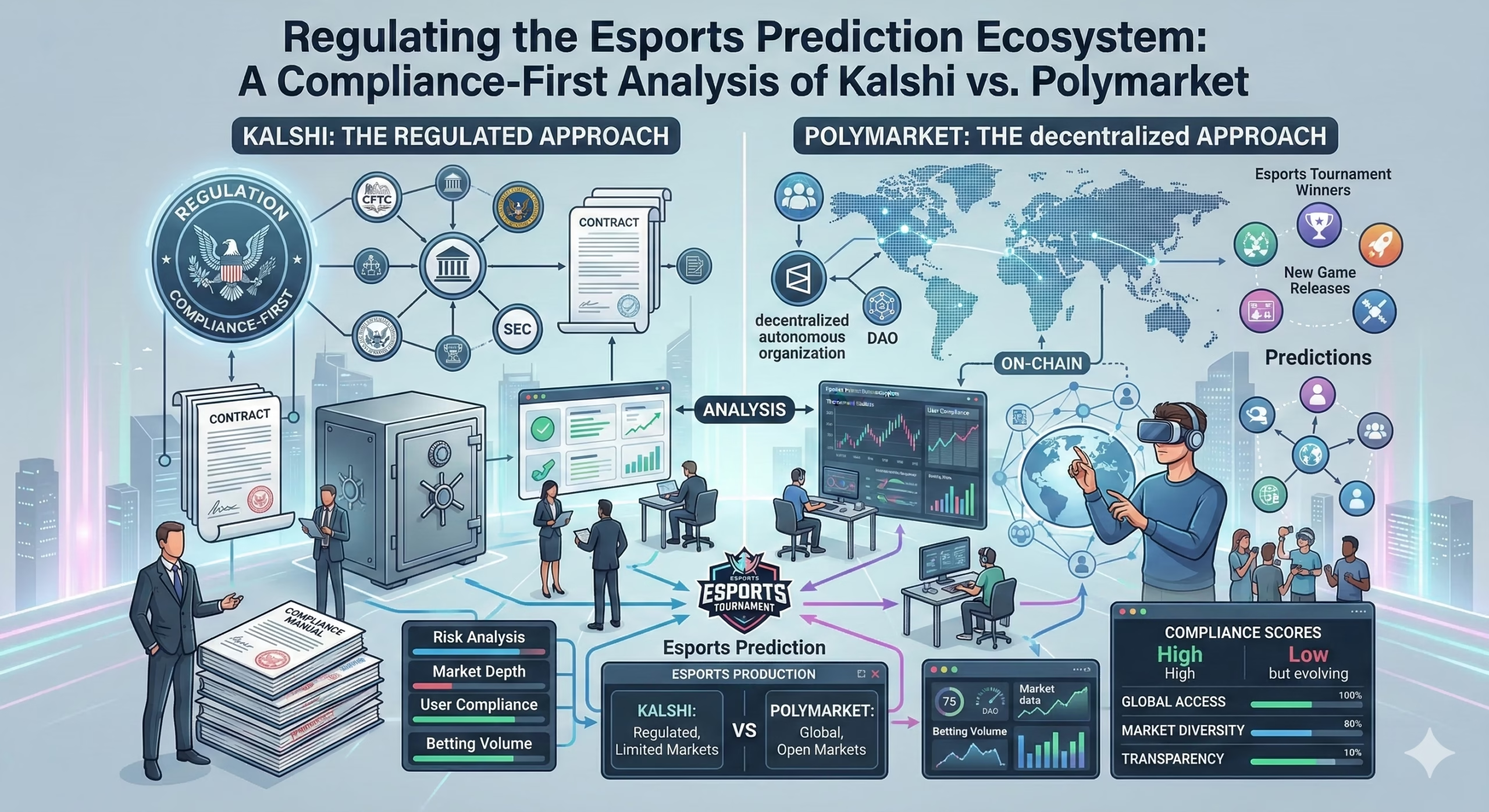
The regulatory posture of both entities represents a significant point of comparison for institutional and serious retail participants. Kalshi received approval from the Commodity Futures Trading Commission as a Designated Contract Market in 2020. That specific approval grants the platform a long track record of operating under federal oversight within the United States. Polymarket pursued an alternative regulatory strategy. In July 2025, Polymarket acquired QCEX, a CFTC-licensed exchange, for $112 million. Following the integration of this acquisition, Polymarket relaunched its services to U.S. users on December 2, 2025. While both platforms now operate under CFTC-related licensing, Kalshi possesses roughly five more years of regulatory history behind it. This operational gap matters to certain users while remaining irrelevant to others, depending heavily on how much weight is placed on an operational track record.
Market Breadth Within Regulated Frameworks
Operating under these regulatory umbrellas, both platforms have taken distinct approaches to how they structure their markets. Kalshi lists roughly 176 active esports markets. These regulated contracts cover League of Legends, CS2, Call of Duty, Valorant, and Dota 2, featuring bet types like game winner, map winner, total maps, and futures contracts on tournament outcomes. Furthermore, Kalshi tends to structure its contracts in a more traditional format, which some bettors find easier to parse.
Conversely, Polymarket runs a larger book with 232 active esports markets and more than $9.3 million in trading volume dedicated solely to esports. The game coverage remains largely similar, though Polymarket differentiates itself by listing tournament-winner futures, such as the PGL Cluj-Napoca 2026. If a user seeks the widest possible selection of contracts on a given match day, Polymarket currently holds a noticeable advantage. However, Polymarket leans into a trading-style interface, meaning the learning curve for new users is a bit steeper if they are transitioning from a traditional sportsbook background. Notably, major tournaments such as Counter-Strike 2 majors and international League of Legends events tend to drive the highest prediction market activity across both platforms
Institutional Partnerships and Mainstream Legitimacy
Corporate partnerships serve as a secondary layer of market validation within this regulated space. Polymarket successfully secured an official sponsorship slot with BLAST, the tournament organizer behind major Counter-Strike 2 and Dota 2 events. This arrangement marks the first time a prediction market has landed a partnership of this kind with a major tournament organizer, and the practical effects are notable. Having an official tie to BLAST grants Polymarket earlier access to event scheduling data, co-branded visibility during broadcasts, and an added layer of legitimacy among esports fans who are already watching those tournaments. At present, Kalshi does not possess an equivalent partnership. For bettors, this agreement enables Polymarket to spin up markets faster around those specific events and subsequently attract more liquidity to them.
Capital Efficiency and Cost Structures
Cost structure plays an important role in determining which platform works best for frequent traders navigating these regulated exchanges. Kalshi charges transaction-based fees on each trade. The exact rate depends on a user’s volume tier, but every contract bought or sold carries a cost baked directly into the transaction itself. Polymarket adopts an alternative approach for its sports markets. There are no standard trading fees, though spreads, totals, and player props may carry built-in costs through the bid-ask spread. If trading frequently on lower-margin contracts, the absence of a per-transaction fee on Polymarket can yield meaningful savings over time. For less active bettors placing just a few contracts per week, the difference is smaller but still present.
From a capital management standpoint, depositing on one platform and leaving money sitting idle on another is a poor use of capital. A more strategic approach involves tracking sign-up offers and deposit incentives across multiple services. For instance, Polymarket has run fee-free trading windows during major tournament weeks, and utilizing a kalshi promo code at registration can offset early transactions on that respective platform. Splitting funds also enables users to compare contract prices on the same match and deploy capital where the odds are more favorable.
Liquidity and Trading Volume Dynamics
A platform’s regulatory standing often directly impacts its ability to attract institutional and retail capital. On February 28, 2026, Polymarket recorded an all-time high of $425 million in daily trading volume across all of its markets. While that figure aggregates political, sports, and esports categories combined, it signals something substantial about the platform’s ability to attract and hold capital. Higher overall volume generally tends to tighten bid-ask spreads, making it easier to enter and exit positions at prices close to fair value. Direct comparative analysis is impeded by Kalshi’s practice of not publishing comparable daily volume figures at the same frequency. Anecdotally, however, Polymarket’s esports contracts tend to fill faster during peak tournament hours.
Executive Summary
If a user prefers a longer regulatory track record and a more familiar contract structure, Kalshi represents the safer selection. Conversely, if a user wants the most markets, the lowest recurring fees, and access to BLAST-affiliated events, Polymarket maintains a distinct advantage. Ultimately, both platforms are highly functional for serious esports betting, and concurrently utilizing both is often the smartest strategic move currently available for bettors looking to compare prices and opportunities across esports prediction markets.


